In the complex choreography of a modern mining operation, stockpiles are the ultimate shock absorbers. They exist to decouple the pit from the plant, absorbing short-term volatility and ensuring that the mill remains fed even when the mine encounters a hiccup.
However, this operational buffer comes at a hidden cost: the loss of material certainty.
While a stockpile may meet its average grade target on a spreadsheet, the internal reality is often far more chaotic. Once material is dumped, spread, and reclaimed, the granularity of geological knowledge begins to decay. What was once a defined polygon in a block model becomes a blended mass of “unknown unknowns.”
The Fundamental Trade-off
Every time a ton of ore is moved to a stockpile, a trade-off is made. You gain the flexibility to manage equipment and schedules, but you trade away the high-fidelity visibility of the material’s origin and specific attributes.
As material is handled, three things inevitably happen:
Grade distribution becomes uncertain: The precise location of high-grade versus low-grade pockets is lost.
Material origin is diluted: Different benches, pits, or lithologies are mixed, complicating downstream reconciliation.
Model accuracy degrades: Assumptions about blast movement and rill angles replace direct observation.
This isn’t just a data problem; it’s a financial one. When reclaimed material deviates from the plant’s expectations, processing conditions shift away from optimal. Recovery rates drop, product quality drifts outside specification, and in extreme cases, the entire circuit is disrupted. These issues originate in the blind spots inside the stockpile.
Why the Status Quo Has Persisted
Historically, the industry has accepted this uncertainty because measuring a stockpile in real-time wasn’t practical. Manual sampling offers limited coverage; laboratory analysis provides feedback too late to influence the current shift; and drilling stockpiles is a costly, non-scalable exercise.
Faced with this data gap, operations have adapted by building in “safety margins.” They use conservative blending strategies, wider buffers across the value chain, and ultimately, they accept a certain level of variability as an unavoidable cost of doing business.
The Missing Layer in the Industry Stack
Most sophisticated operations already utilise a robust technology stack. They have Planning Models to define what should happen and Fleet Management Systems (FMS) to execute those instructions.
Yet, there is a missing layer: the Validation of what actually happened. Planning is a hypothesis based on drilling; execution is a digital instruction to a truck driver. But reality in the muck pile rarely follows the plan perfectly. Key questions often go unanswered: How do you detect a misclassified waste pocket inside an ore polygon? How do you validate blast movement assumptions? How quickly can you detect dilution before it hits the primary crusher?
This is where value leakage occurs.
From Assumption to Measurement
The technological landscape is shifting. Advances in sensor-based characterisation now allow for the direct, high-resolution measurement of stockpiled material.
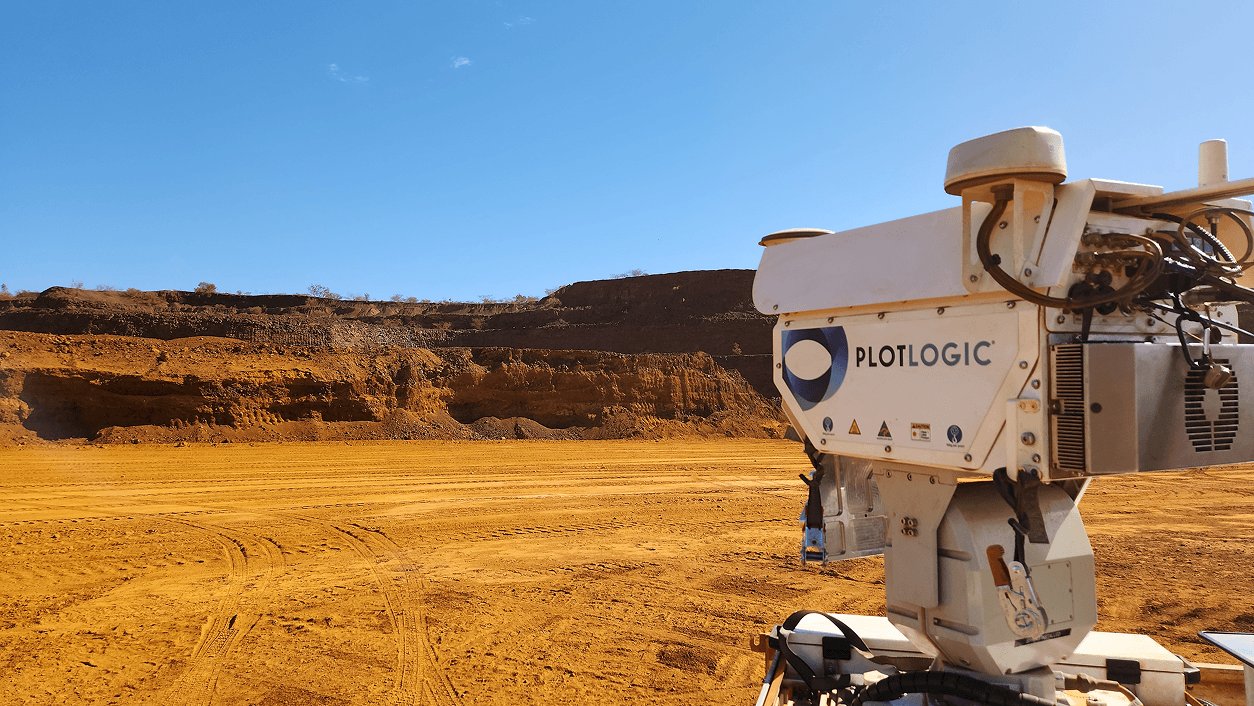
Plotlogic’s OreSense® changes the equation by allowing grade and mineralogy to be measured during both the build and reclaim phases. Instead of relying on a model that degrades over time, teams gain spatial, real-time data. This shifts the stockpile from an “estimated” asset to a “measured” one.
Importantly, this is not a replacement for existing systems. Stockpile modelling and material tracking remain critical for operational coordination. Rather, OreSense® acts as the “truth layer” that complements them:
Models optimise the assumptions.
Execution systems move the material.
OreSense® measures what is actually there.
This is particularly vital for complex orebodies where mineralogical variability isn’t always captured in a standard grade control model, or where dilution and misclassification risk are high.
The Economic Outcome: Predictable Performance
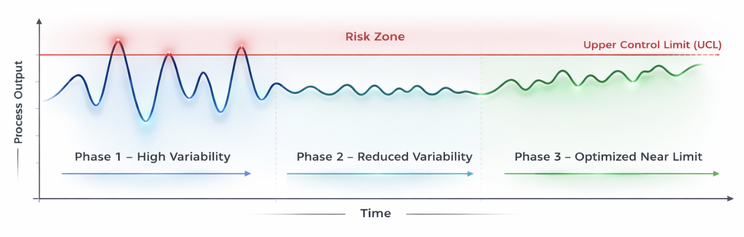
By identifying localised variability before it propagates through the circuit, operators can predict reclaim performance with far higher confidence. They can adjust blending strategies in real-time and prepare downstream processes for the specific material arriving at the mill.
The result is a system-level shift. By moving away from a model-driven approach that absorbs variability downstream, operations move toward a measurement-driven approach that manages variability at the source.
The shift from lagging insight to real-time control is the next frontier of capital efficiency. Stockpiles will always be a part of mining, but with the right intelligence, they no longer have to be points of uncertainty. They can become a transparent, optimised part of a continuous mine-to-mill feedback loop.